Published
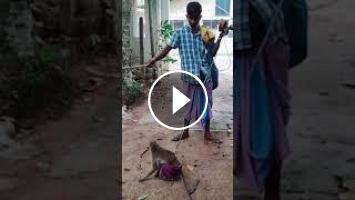
Sri Lankan #Gypsy people. #Sri_Lankan Gypsy people are an ethnic group from Sri Lanka who trace their origins in India (Telugu areas of present Telugu land) centuries ago.
The biggest contribution of the gypsy is said to be in occultism. Did you know a traditional gypsy never sleep twice in the same bed, never drink water twice from the same well and never cross the same river twice in a year?
The Sri Lankan gypsies “#Ahikuntaka” community is one of the most diminishing clans in the island second to Rodee. You might have noticed the men and woman engaging in activities such as monkey dancing, snake charming, hand craftsmanship, preparing ancient herbal medicines and palm reading or fortunetelling.
Woman clad in colorful saris and with red mouth that showed signs of chewing beetle, with fascinating pieces of jewellery around their necks, their sun-bleached hair often knotted up, the men with their pet monkey or thatched boxed snake is not a regular view anymore in Sri Lanka.
In the eyes of the city-folk, the Ahikuntika or gypsies are people who live on the fringes of society, making a living out of street entertainment. But the community nurtures a culture unlike many other... but much like several indigenous communities, the Ahikuntika’ closely-guarded customs and traditions are gradually disappearing.
#TRAVELBEINGDOM
Sri Lankan Gypsy people are an ethnic group from Sri Lanka who trace their origins to Telugu-speaking regions centuries ago. They are the only nomadic group of people living on the island. They live in small palmyra huts for two or three days in one place. Their ancestral language is a dialect of Telugu, also known as Sri Lankan Gypsy Telugu. They are the only nomadic group of people living in Ceylon and are known as the Ahikuntakas otherwise called Kuravans.
Gypsy women can be mistaken for Tamils. They wear saris, chew betel and travel to neighboring villages. They tell fortune by reading your palm and do so for clothes, provisions and money. Gypsy males wear sarong. They entertain people with monkeys and snakes in crowded places. But with their lively music and dancing, gypsies have contributed and influenced Sri Lankan literature, music and cinema. Snake shows are characteristic of the gypsies and the snake is a symbol of their community.
Various governments, NGOs and missionary societies have made attempts to settle them down, and thus some are settled in villages. Amongst the majority Sinhalese speakers they are known as ahikuntaka, while amongst the minority Sri Lankan Tamils and Muslims they are known as Kuravar. Some make their living by fortune telling, snake charming and using monkeys and dogs in performances. Those who are settled in resettlement villages are subsistence farmers and farm hands to other farmers.
They also speak Sinhalese or Tamil based on their area of settlement. Most seem to be settled in the eastern Batticaloa district. Most follow rudimentary elements of Hinduism, while some are Christians and yet others adhere to Buddhism. According to a 2017 survey by the Government of Sri Lanka, their population is ~4,000. Most speak Sinhala, with only a few speaking their ancestral language.
Gypsies are among the few isolated communities of Sri Lanka, who trace their origins to India. You will notice them in Sri Lankan cities as well as in villages, temporarily sheltered somewhere in the area. They are traditional people who don’t lawfully own land. Their temporary homes look like igloo huts. They have a very few possessions. They are going from place to place making a living and their migration is from rural to urban. Various governments, and societies have made attempts to settle them down, hence, some are settled in villages.
they believed that they can’t stay at one place for more than seven days that’s why they are known as the “Ahikuntikas” in Sri Lanka.
Snake shows are characteristic of the gypsies and the snake is a symbol of their community. The connection between snakes and the “Ahikuntika”(Gypsy) people, is that sometimes it assumes a spirituality and forms of worship. Ahikuntika people have been traditionally known to earn day-to-day existence and had no practice of saving for the future. But their economy has changed as they have now largely adapted to the culture of other communities. it became evident that save money for their needs by now.
Komarika-galayaya in Kala Wewa with a population of 300, is the only ‘Ahikuntika” village in Sri Lanka. The residents of this village have given up the wandering lifestyle, but they still practice the old crafts like their wandering comrades. They still have a leader in the coven and traditions are still followed.
The biggest contribution of the gypsy is said to be in occultism. Did you know a traditional gypsy never sleep twice in the same bed, never drink water twice from the same well and never cross the same river twice in a year?
The Sri Lankan gypsies “#Ahikuntaka” community is one of the most diminishing clans in the island second to Rodee. You might have noticed the men and woman engaging in activities such as monkey dancing, snake charming, hand craftsmanship, preparing ancient herbal medicines and palm reading or fortunetelling.
Woman clad in colorful saris and with red mouth that showed signs of chewing beetle, with fascinating pieces of jewellery around their necks, their sun-bleached hair often knotted up, the men with their pet monkey or thatched boxed snake is not a regular view anymore in Sri Lanka.
In the eyes of the city-folk, the Ahikuntika or gypsies are people who live on the fringes of society, making a living out of street entertainment. But the community nurtures a culture unlike many other... but much like several indigenous communities, the Ahikuntika’ closely-guarded customs and traditions are gradually disappearing.
#TRAVELBEINGDOM
Sri Lankan Gypsy people are an ethnic group from Sri Lanka who trace their origins to Telugu-speaking regions centuries ago. They are the only nomadic group of people living on the island. They live in small palmyra huts for two or three days in one place. Their ancestral language is a dialect of Telugu, also known as Sri Lankan Gypsy Telugu. They are the only nomadic group of people living in Ceylon and are known as the Ahikuntakas otherwise called Kuravans.
Gypsy women can be mistaken for Tamils. They wear saris, chew betel and travel to neighboring villages. They tell fortune by reading your palm and do so for clothes, provisions and money. Gypsy males wear sarong. They entertain people with monkeys and snakes in crowded places. But with their lively music and dancing, gypsies have contributed and influenced Sri Lankan literature, music and cinema. Snake shows are characteristic of the gypsies and the snake is a symbol of their community.
Various governments, NGOs and missionary societies have made attempts to settle them down, and thus some are settled in villages. Amongst the majority Sinhalese speakers they are known as ahikuntaka, while amongst the minority Sri Lankan Tamils and Muslims they are known as Kuravar. Some make their living by fortune telling, snake charming and using monkeys and dogs in performances. Those who are settled in resettlement villages are subsistence farmers and farm hands to other farmers.
They also speak Sinhalese or Tamil based on their area of settlement. Most seem to be settled in the eastern Batticaloa district. Most follow rudimentary elements of Hinduism, while some are Christians and yet others adhere to Buddhism. According to a 2017 survey by the Government of Sri Lanka, their population is ~4,000. Most speak Sinhala, with only a few speaking their ancestral language.
Gypsies are among the few isolated communities of Sri Lanka, who trace their origins to India. You will notice them in Sri Lankan cities as well as in villages, temporarily sheltered somewhere in the area. They are traditional people who don’t lawfully own land. Their temporary homes look like igloo huts. They have a very few possessions. They are going from place to place making a living and their migration is from rural to urban. Various governments, and societies have made attempts to settle them down, hence, some are settled in villages.
they believed that they can’t stay at one place for more than seven days that’s why they are known as the “Ahikuntikas” in Sri Lanka.
Snake shows are characteristic of the gypsies and the snake is a symbol of their community. The connection between snakes and the “Ahikuntika”(Gypsy) people, is that sometimes it assumes a spirituality and forms of worship. Ahikuntika people have been traditionally known to earn day-to-day existence and had no practice of saving for the future. But their economy has changed as they have now largely adapted to the culture of other communities. it became evident that save money for their needs by now.
Komarika-galayaya in Kala Wewa with a population of 300, is the only ‘Ahikuntika” village in Sri Lanka. The residents of this village have given up the wandering lifestyle, but they still practice the old crafts like their wandering comrades. They still have a leader in the coven and traditions are still followed.
- Category
- Palm Reading
- Tags

Be the first to comment
Up Next
Autoplay
-
38:08

Love line on the palm... Libra - “Dancing in the Streets!” Posted 2/28/20 Timeless
-
06:49
200rps Street Palm Reading in Kelara, India : Woman says i will Marry Two Wives
-
10:30
Bryan Kohberger Approached Kaylee Goncalves on Main Street Stalked Ladies #bryankohberger #arrested
-
08:00
TEMPLE STREET FORTUNE TELLER. Sagittarius March 2020 Monthly Forecast: New Initiative Requires a Ble
-
01:05
'Candyman' Director Nia DaCosta To Helm 'Captain Marvel 2' | News Flash | Entertainment Weekly
-
00:16
Subscribe & Vote For Celebrity Tarot Psychic Reading #entertainment #psychictarot #tarotreading
-
07:38
Gay Love. Baby Monkey | Reaction DouDou Very Sleepy But Still Playing Slide With Bono
-
08:14
Narendra modi hast rekha - Baby Monkey | Reaction DouDou And Mom Eat Jackfruit Together
-
12:19
SAGITTARIUS | MAKING BANK AND MAKING LOVE | JULY 1-7, 2021 WEEKLY TAROT READING
-
26:17
Ask a medium - March 1, 2020 Psychic Predictions For Entertainment
-
00:11

I Will Draw Your Solumate, Psychic Drawing Soulmate
-
35:35

Jupiter Saturn Conjunction in Vedic Astrology
-
18:51

Libra August 2021 Psychic Tarot Reading
-
13:50

GEMINI July 2021 This Time is Different! Tarot psychic reading energy forecast messages
-
11:47

GEMINI July 2021 Tarot reading
-
04:14

YOUR LUCKY DAY ???? Taurus horoscope for today TAURUS - JUNE 7 2021 ❤️ Daily horoscope TAURUS ♉️ ???
-
25:43

⌛ TAURUS!!! ♉URGENT MESSAGE FROM SPIRIT????️ Taurus June 2021 ???? Taurus HOROSCOPE ???? Taurus TARO
-
26:30

♉ TAURUS!!! THE DEAD IS CALLING!!! ???????? Taurus May 2021 ???? Taurus HOROSCOPE ???? Taurus TAROT
-
20:40

TAURUS WEEKLY TAROT READING "AN UNEXPECTED CHANGE OF FORTUNE TAURUS!" January 4th-10th 2021 #Youtube
-
20:04

Astrology knight - Saturn-Jupiter Conjunction in Capricorn 2020-2021 | The Great Conjunction | Reorg